On the Label: Zinc Oxide
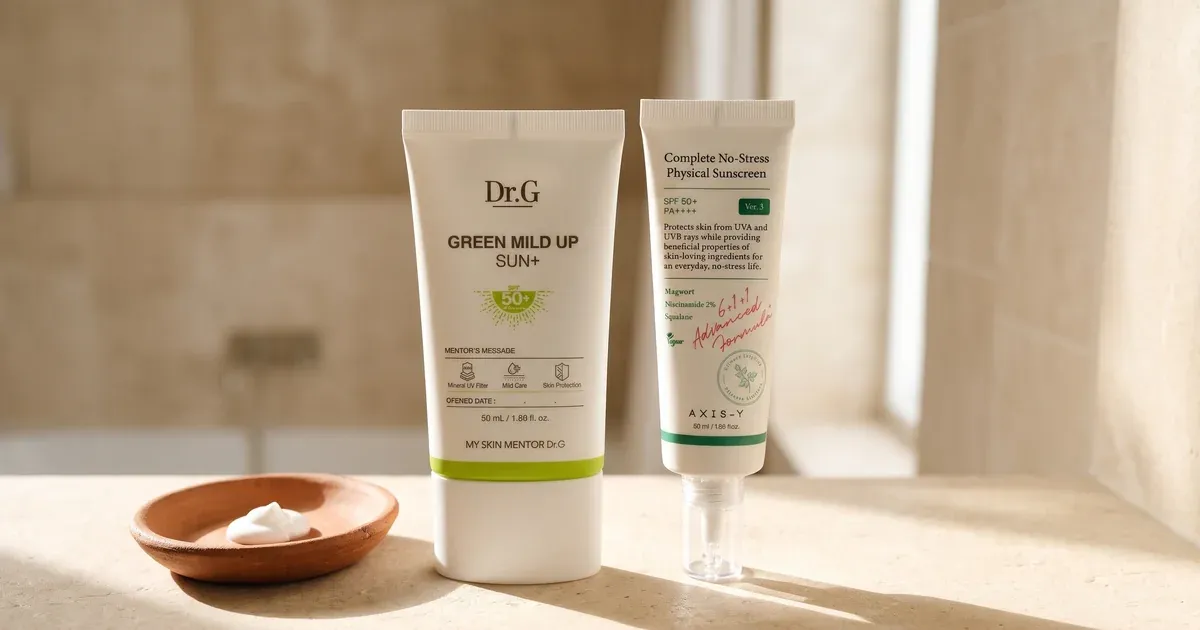
Zinc oxide. A mineral UV filter. According to the American Academy of Dermatology, a sunscreen whose active ingredient is zinc oxide, titanium dioxide or both is a physical sunscreen, also called a mineral sunscreen[1]. Zinc oxide protects against both UVA and UVB rays[2][3]. It’s there to filter sunlight, not to treat skin conditions. This entry pulls together published sources, numbered at the end.
Does it cover both UVA and UVB?
Cleveland Clinic says zinc oxide gives excellent protection against both UVA and UVB rays[2]. A review of the two mineral filters found that zinc oxide absorbs broadly across both UVA and UVB, while titanium dioxide is stronger on UVB[3].
All sunscreens form a layer that absorbs the sun’s rays, and physical sunscreens also reflect them[1]. Mineral sunscreens start working as soon as you put them on[2].
Does it soak into your skin, and how much is allowed?
Very little. Your skin doesn’t absorb much zinc oxide[2], and the review above rates the health risk from mineral filters as extremely low because they don’t get through the skin[3]. Put simply, mineral ingredients stay on top of the skin[4].
As for how much is allowed, the FDA has found enough safety data to propose that sunscreens with zinc oxide at up to 25% are safe and effective[5]. The EU allows zinc oxide, in both nano and non-nano form, at up to 25% as a UV filter, except in products that could be breathed into the lungs[6].
What about nano zinc oxide and spray sunscreens?
“Nano” means the zinc oxide comes as very small particles. On skin, that’s not the worry. Breathing it in is. The EU’s scientific committee concluded that nano zinc oxide in spray products cannot be considered safe, because it may be inhaled[7]. The review above also recommends against spray sunscreens with nanoparticles[3].
So if you want zinc oxide, pick a cream or lotion rather than a spray.
Why can it look white, and does it suit sensitive skin in the heat?
Mineral sunscreens tend to be thicker than chemical ones and can leave a white cast[2]. Tinted versions help, and if the tint comes from iron oxide, it also blocks visible light, which helps prevent dark spots[8].
For sensitive skin, dermatologists recommend physical sunscreens[1]. Cleveland Clinic adds that mineral formulas suit sensitive or allergy-prone skin and are less likely to clog pores[2].
In the heat, remember that no sunscreen is “sweatproof”. Reapply after sweating or swimming[1]. For how zinc oxide compares with chemical filters, see mineral vs chemical sunscreen. If your skin reacts, stop and see a dermatologist.
Where to buy, by country
Some of these links earn Sunwise a commission.
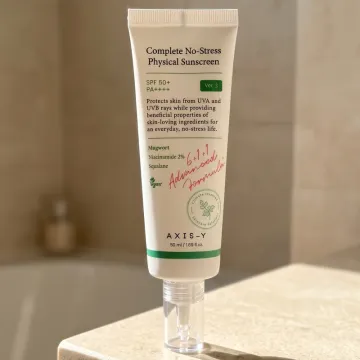
AXIS-Y Complete No-Stress Physical Sunscreen (50mL)
| Country | Where | Price |
|---|---|---|
| Israel | Olive Young Global | US$16.10checked |
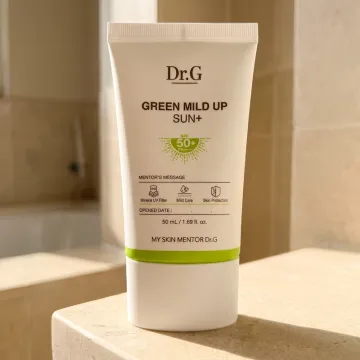
Dr.G Green Mild Up Sun+ Special Set (50mL + 20mL)
| Country | Where | Price |
|---|---|---|
| Israel | Olive Young Global | US$24.16checked |
Prices move. Check the total at checkout before you pay.
Sources
- [1]Sunscreen FAQs, American Academy of Dermatology (read )
- [2]Mineral Sunscreen: What It Is and How To Use It, Cleveland Clinic (read )
- [3]A review of inorganic UV filters zinc oxide and titanium dioxide, Photodermatology, Photoimmunology & Photomedicine (read )
- [4]Sunscreen & Your Skin, The Skin Cancer Foundation (read )
- [5]Questions and Answers: FDA's regulatory actions on over-the-counter sunscreen, U.S. Food and Drug Administration (read )
- [6]Commission Regulation (EU) 2016/621, EUR-Lex (read )
- [7]Zinc oxide (nano form), European Commission, Scientific Committees (read )
- [8]How to apply sunscreen, American Academy of Dermatology (read )