Keeping Shine Down on a 40°C Commute
The short answer: Heat can push skin to make more oil, though the evidence so far comes from lab cells, not from people on a commute[2]. What the AAD (a dermatologists' association) recommends: oil-free, noncomedogenic products[1], a sunscreen with zinc oxide and titanium dioxide and no fragrance or oils[1], blotting papers pressed on rather than rubbed[1], and reapplying sunscreen at least every two hours, sooner when you sweat[3].
Heat check
- Suits
- Skin that turns shiny early in the day: the AAD's oily-skin advice is the base of this guide[1]
- In the heat
- Heat is a plausible trigger for extra oil, but the evidence is from lab cells[2]. Sunscreen still needs reapplying at least every two hours, sooner when you sweat[3]
- Price in the region
- This guide names no product, so there is no price to list
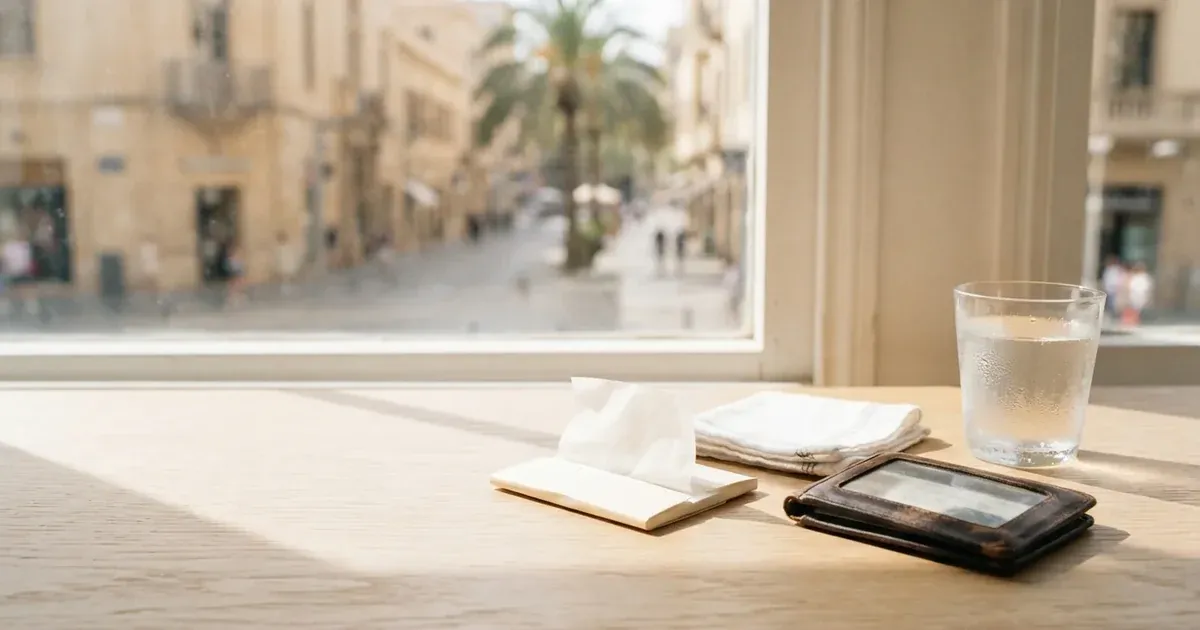
By the time the bus reaches your stop, your forehead already shines. It happens faster in strong heat, and it is easy to blame your skincare.
Short answer: you can keep shine in check with a few habits, but nothing stops it completely. Heat does seem to push skin to make more oil. In one lab study, human oil-gland cells exposed to heat from infrared radiation switched on more of the machinery for making fats, and the authors wrote that the findings “provide evidence that IR radiation can stimulate sebum production”[2]. Those were cells grown in a dish, not people on a commute, so treat it as a hint rather than proof.
This guide pulls together dermatologist and regulator advice. It is a roundup of published guidance, not a diary of what Yasmin tried.
What should go on your skin before you leave?
Start with what you put on before you leave. The AAD, a dermatologists’ association, advises choosing skin care labelled “oil free” and “noncomedogenic”, which means it is made not to clog pores[1].
Oily skin still needs moisturizer. For sunscreen, the AAD points to formulas with zinc oxide and titanium dioxide, and says to avoid ones with fragrance or oils[1]. That is guidance about what to look for on the label. It does not say which brand looks matte, so check the ingredient list rather than the promise on the front.
How do you use blotting paper without making it worse?
Blotting paper is the part you carry. The AAD’s method: press the paper gently against your face and leave it for a few seconds so it soaks up the oil. Do not rub, because rubbing spreads the oil to other areas[1].
The same page asks you to keep your hands off your face. Touch it only when you are cleansing, moisturizing, or applying sunscreen or makeup, and wash your hands first[1]. On a crowded bus, that means pressing the paper once and putting it away.
Do you still need to reapply sunscreen?
Sweat and sunscreen are a separate question from shine, but they meet on the same commute. The FDA says to reapply sunscreen at least every two hours, and sooner when you are swimming or sweating[3].
So if you blot at midday, treat it as a reminder to check your sunscreen too. Nothing in these sources explains how to reapply over makeup, so this guide leaves that out.
Skip it if you want a product shortlist or a promise that shine will stop: this guide names no product, and none of its sources promises that shine can be stopped, only kept in check.
Sources
- [1]Oily skin: dermatologists' tips for managing it, American Academy of Dermatology (read )
- [2]Heat shock and infrared radiation effects on lipid biosynthesis in human sebocytes (Lipids in Health and Disease, 2019), PubMed Central (read )
- [3]Sunscreen: How to Help Protect Your Skin from the Sun, U.S. Food and Drug Administration (read )
Same problem, other reads
- Sunscreen for Acne-Prone Skin in the Heat, Compared
Dr.G Green Mild Up Sun+, AXIS-Y No-Stress Physical or Isntree Watery Sun Gel for acne-prone skin in the heat? Filters, oils, reviews, prices.
- Light Moisturizers for Oily Skin in the Heat, Compared
Purito Oat-In, Isntree Aqua Gel Cream or COSRX Oil Free Lotion for oily skin in hot weather? Base, feel, oily-skin reviews and prices.
- medicube Zero Pore Pad Review: What Oily Skin Users Say
Does the medicube Zero Pore Pad help oily skin in the heat? What is in it, what reviewers praise and complain about, how often to use it, and the price.