Makeup in Hot Weather: Sunscreen Before or After?
The short answer: Sunscreen goes on after your other skin care and beneath your makeup[1]. Use at least 1 teaspoon for your face and allow about 15 minutes before going out[3]. Makeup with SPF only counts if it is SPF 30 or higher and you reapply it every two hours[1]. No sunscreen is sweatproof, so reapply after sweating[4].
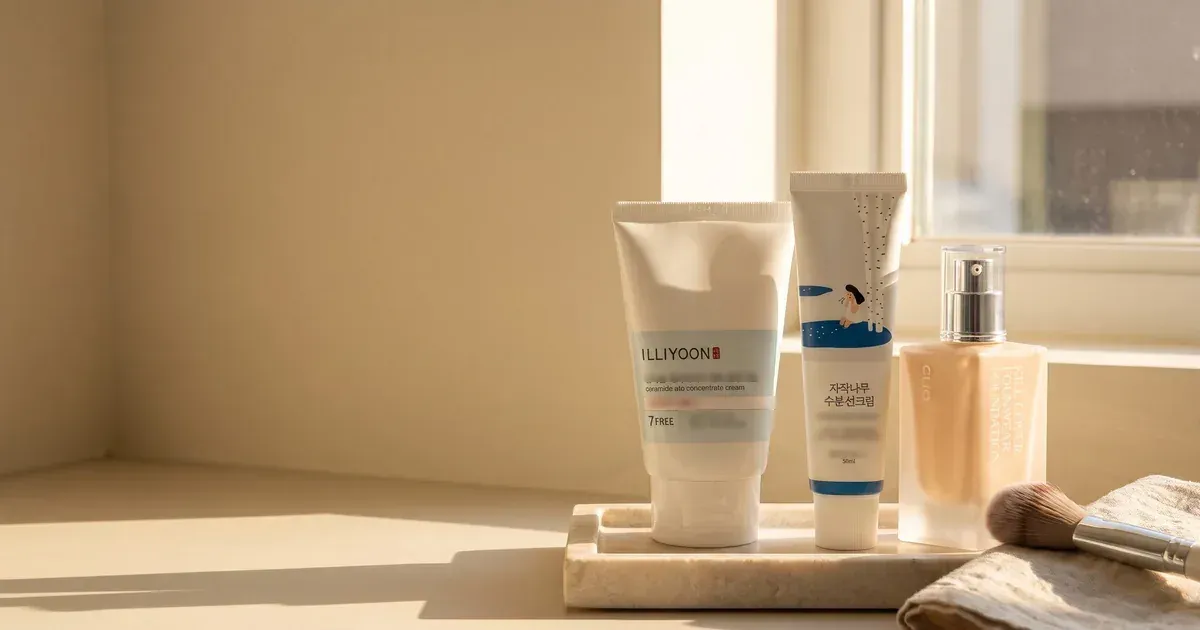
Some products pictured on this page are shown for illustration only and aren’t covered in this article.
You are doing your makeup before a workday that will hit the high thirties by lunch. Moisturiser, sunscreen, foundation: but in which order? And if your foundation already says SPF on the bottle, do you need sunscreen at all?
This guide answers those questions using only pages from the AAD, an association of dermatologists, with each page numbered at the end. One thing to say up front: these sources explain where sunscreen belongs and how to keep it working. They do not promise that any order will stop makeup from sliding in the heat, and neither do we.
What order do skincare, sunscreen and makeup go in?
The AAD is direct about this: always put sunscreen on after your other skin care products, and beneath your makeup[1]. So the order is skin care first, sunscreen next, makeup last.
If you treat breakouts, there is one more rule. When you want to wear makeup while using acne medication, apply the medication first[2], before the makeup goes on.
Notice what the order is for. It keeps sunscreen in direct contact with your skin and under everything decorative, so it can do its job. Our sources do not say this order makes makeup last longer in the heat, so we will not claim that it does.
How much sunscreen, and how long before makeup?
For your face, the AAD says to use at least 1 teaspoon of sunscreen, roughly the amount that covers the length of your index and middle fingers[3]. That is more than many of us use under foundation.
Apply it before you go out: the AAD says it takes approximately 15 minutes for your skin to absorb sunscreen and start protecting you[3]. That time is about protection, not about how well your makeup grips, so plan your morning around it rather than the other way round.
If dark spots are a worry, the AAD adds that a tinted sunscreen with iron oxide helps protect against them, because iron oxide also guards against the sun’s visible light[3].
Is foundation with SPF enough?
Usually not on its own. Dermatologist Rebecca Baxt, writing for the AAD, says that to get the SPF benefit from makeup you would have to use one with SPF 30 or higher, and you would also have to reapply your makeup every two hours[1].
The AAD’s sunscreen questions page makes the same point from another angle: moisturisers and cosmetics with SPF are convenient, but sunscreen still needs to be reapplied approximately every two hours when you are outdoors[4].
For most workdays, that makes SPF foundation a useful extra layer rather than a replacement for the sunscreen underneath.
What happens to it all when you sweat?
Sweat is where hot days test the routine. The AAD says no sunscreen is “waterproof” or “sweatproof”, and manufacturers are not allowed to use those words; if you use a water-resistant sunscreen, reapply it after sweating[4]. Outdoors, the AAD advises reapplying every two hours, and immediately after sweating[3].
The AAD’s advice on makeup and breakouts adds a step for the end of the day: wash your face after any activity that makes you sweat[2].
For sunscreens that cope better with sweat, see sunscreens that hold up on hot, sweaty days. For what to do once you are home and sticky, see skincare after sweating outdoors.
Choosing a base that won’t cause breakouts
Heat and heavy layers can be a recipe for breakouts. The AAD notes that even women who would not otherwise have acne can develop acne cosmetica, breakouts caused by makeup[2]. It can take anywhere from a few days to 6 months for the spots to appear[2], so a product that seemed fine at first is not automatically in the clear.
What the AAD suggests[2]:
- Look for one of these terms on the label: oil-free, won’t clog pores, or non-comedogenic.
- Apply makeup gently, with a feather-light touch, so you do not irritate your skin.
- Clean your makeup brushes every week, and do not share them.
And at night, always remove your makeup before bed: leaving it on while you sleep can age your skin more quickly and cause breakouts[1].
What this guide does not cover
This guide draws only on pages from the AAD, numbered below.
None of them says that a particular layering order, or any product, keeps makeup in place on a hot day, so we have not promised that. We have not named products, and nothing here diagnoses acne or replaces advice from a dermatologist. If breakouts keep coming back, that is worth raising with one.
Skip it if you want makeup that will not slide in the heat: our sources do not say any layering order makes makeup last longer, and this guide names no product.
Sources
- [1]Dermatologist-recommended skin care for your 20s, American Academy of Dermatology (read )
- [2]I have acne! Is it okay to wear makeup?, American Academy of Dermatology (read )
- [3]How to apply sunscreen, American Academy of Dermatology (read )
- [4]Sunscreen FAQs, American Academy of Dermatology (read )
Same problem, other reads
- Packing a Skincare Bag for a Beach Weekend
What the AAD and FDA say to pack for a beach weekend: SPF 30+ water-resistant sunscreen, SPF lip balm, a hat, enough to reapply, and after-sun care.
- How to Protect Your Hair and Scalp From Strong Sun
What the AAD, the Skin Cancer Foundation and Cleveland Clinic say about sun and hair: which hat covers enough, sunscreen on a scalp, and hours to avoid.
- Skincare After Sweating Outdoors: What to Do First
What health sources say to do after heavy sweating outdoors: wash gently, change clothes if you can't shower, soothe heat rash, reapply sunscreen.