Mineral vs Chemical Sunscreen: Which for Strong Sun?
The short answer: Mineral sunscreens contain zinc oxide, titanium dioxide or both; chemical ones contain neither[1]. Both absorb UV, and mineral ones also reflect it[1]. For strong sun the type matters less than the basics: SPF 30 or higher, broad spectrum and water resistant[4], reapplied every two hours and right after sweating[5].
Heat check
- Suits
- Sensitive skin: dermatologists recommend mineral[1]. Acne-prone skin: mineral is less likely to clog pores[2]
- In the heat
- Chemical formulas often resist water better[2], but no sunscreen is sweatproof: reapply after sweating[1]
- Price in the region
- This guide names no product, so there is no price to check
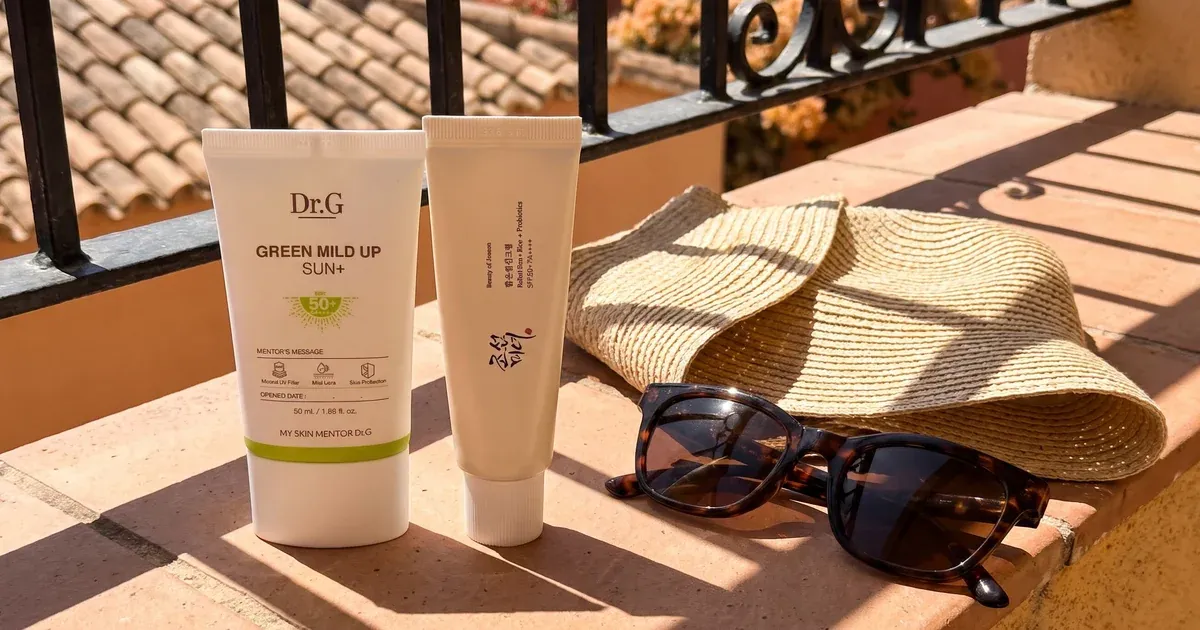
Some products pictured on this page are shown for illustration only and aren’t covered in this article.
Strong sun, a long walk, sweat running into your eyes, and a sunscreen aisle split into two camps: mineral and chemical. Somewhere online you have read that chemical sunscreen is unsafe, or that mineral sunscreen is the only kind that works. It is hard to know which claim to believe.
This guide puts together what three sources say: the AAD (a dermatologists’ body), Cleveland Clinic and the FDA (the U.S. regulator), with each source numbered at the end. It names no product or brand.
What is the difference between mineral and chemical sunscreen?
The AAD sorts sunscreens by their active ingredient. If it is titanium dioxide, zinc oxide or both, you have a physical sunscreen, also called mineral[1]. If your sunscreen contains neither, it is a chemical sunscreen[1].
You may have read that mineral sunscreen blocks the sun while chemical sunscreen absorbs it. The AAD describes it differently: all sunscreens form a protective layer on your skin that absorbs the sun’s rays, and physical sunscreens reflect them as well[1].
There is also a practical difference in timing. Cleveland Clinic says mineral sunscreens are usually opaque when you apply them and start working immediately[2]. Chemical sunscreens typically need about 20 minutes to fully absorb and become effective[2]. If you put sunscreen on at the door, that gap matters.
Is chemical sunscreen safe? What the FDA says
The FDA is the U.S. regulator, so its rulings apply to sunscreens sold in the U.S. We use it here because it publishes where each sunscreen ingredient stands.
For the two mineral filters, the FDA found sufficient safety data to propose that sunscreens containing zinc oxide and titanium dioxide, at concentrations of up to 25%, are generally recognised as safe and effective (GRASE)[3].
In its 2021 proposed order, the FDA did not give GRASE status to sunscreens containing twelve chemical filters, because additional data is needed[3]. They are cinoxate, dioxybenzone, ensulizole, homosalate, meradimate, octinoxate, octisalate, octocrylene, padimate O, sulisobenzone, oxybenzone and avobenzone[3].
“More data needed” is not the same as “harmful”. The AAD says the science doesn’t show that any sunscreen ingredient currently available in the U.S. is harmful to human health, and that an ingredient being absorbed into the bloodstream does not mean it is unsafe[1]. While the FDA is asking for more data, it does not say the ingredients are unsafe[1].
The list is also moving. In June 2026 the FDA issued a final order adding bemotrizinol as a sunscreen active ingredient[3]. And the FDA’s own advice is that people can reduce the risks of sun exposure by continuing to use sun protection, including sunscreen[3].
Which works better in strong sun and sweat?
The AAD’s checklist is the same for both types[4]:
- SPF 30 or higher.
- Broad spectrum, meaning it protects against both UVA and UVB rays.
- Water resistant, meaning it stays on wet or sweaty skin for a while before you need to reapply.
Cleveland Clinic says chemical sunscreens often have better water resistance than mineral ones[2]. That is a point in their favour on a sweaty day, but it does not remove the need to reapply. The AAD is clear that no sunscreen is “waterproof” or “sweatproof”, and manufacturers are not allowed to use those words; with a water-resistant sunscreen, reapply after swimming or sweating[1].
How much and how often matter as much as which type:
- For your face, use at least 1 teaspoon, about the length of your index and middle fingers[5].
- Outdoors, reapply every two hours, and immediately after swimming or sweating[5].
- Don’t leave your sunscreen in a hot car: the AAD says heat speeds up ingredient breakdown[1].
A mineral or a chemical sunscreen that meets all of that will do the job in strong sun. For formulas that hold up in heat, see our guide to sunscreens that don’t melt.
Which suits sensitive, acne-prone or darker skin?
Sensitive skin. The AAD says dermatologists recommend mineral sunscreens for people with sensitive skin[1]. Cleveland Clinic agrees that mineral sunscreens are generally well tolerated by sensitive skin and by people prone to skin allergies, and adds that chemical sunscreens carry a higher risk of allergic reactions in some cases[2].
Acne-prone skin. Cleveland Clinic says mineral sunscreens are less likely to clog pores and contribute to breakouts[2].
If a white cast bothers you. This is the main trade-off. Mineral sunscreens often have a thicker texture and can leave a white cast on your skin[2]. Chemical sunscreens are usually transparent, without a white cast[2].
If you get dark spots. The AAD says a tinted sunscreen with iron oxide better protects your skin from developing dark spots, because iron oxide also blocks the sun’s visible light[5].
In the end, both sources land in the same place. The AAD says the type of sunscreen is a matter of personal choice, and the best one is the one you will use again and again[1]. Cleveland Clinic says both types have their advantages, and the best sunscreen for you is the one you are willing to use[2]. If texture is what puts you off, our comparison of Asian and European sunscreens looks at that side.
Skip it if you already have a sunscreen you like and wear every day: the AAD says the best sunscreen is the one you will use again and again[1].
Sources
- [1]Sunscreen FAQs, American Academy of Dermatology (read )
- [2]Mineral vs. Chemical Sunscreen: Which Is Better?, Cleveland Clinic (read )
- [3]Questions and Answers: FDA's regulatory actions on over-the-counter sunscreen, U.S. Food and Drug Administration (read )
- [4]How to select a sunscreen, American Academy of Dermatology (read )
- [5]How to apply sunscreen, American Academy of Dermatology (read )
Same problem, other reads
- Cream or Serum? Relief Sun vs Hyalu-Cica Sun in Dry Heat
Relief Sun or SKIN1004 Hyalu-Cica Sun Serum for strong sun and dry heat? Same UV filters, different feel: what brands and reviewers say, plus prices.
- Your First Skincare Routine in Hot Weather
A three-step routine from the AAD: cleanse, moisturise, protect. Sources differ on SPF 15 or 30. We found nothing that changes the routine for heat.
- Removing Sunscreen: Is One Cleanser Enough?
Does one wash remove sunscreen? Cleveland Clinic says double cleansing helps with waterproof sunscreen but is usually not necessary. Plus AAD wash steps.